
Wall Tent vs Bell Tent: Which Canvas Tent Style Is Best?
Exploring canvas tents and not sure what style suits best?
When it comes to deciding between wall tents vs. bell tents, each style of canvas tent has its own set of advantages. Like many things, there is no best canvas tent – it simply comes down to individual needs and wants.
At Beckel Canvas, we’ve spent decades around traditional American-made wall tents, and we’ve also worked closely with Life inTents and their modern canvas bell tents. That experience has given us a useful perspective on where each style really shines — and where one may make more sense than the other.
To help you choose, let’s take a look at these canvas tent styles and compare their features.
Wall Tents & Bell Tents: Choosing the Best Tent Features for You
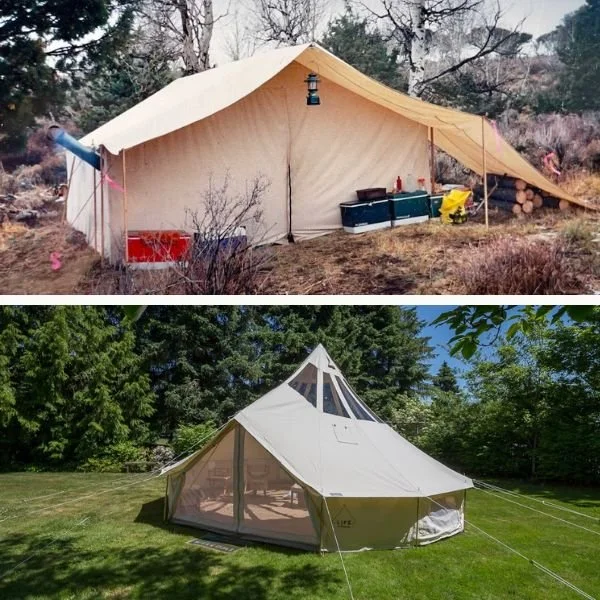
The Overall Shape & Footprint
Wall tents and bell tents vary in overall shape and size. Wall tents provide a rectangular footprint, complete with vertical walls and an A-frame style roof. Whereas a bell tent has a round footprint and a sloped conical roof with short sidewalls.
Why does this matter? Due to their round footprints, short sidewalls, and sloped roofs, bell tents typically have limited headspace along the sides. In addition, the round floor and center pole limit the arrangement of camp furniture. Wall tents provide an open rectangular interior space with standard-size vertical walls, which can even accommodate bunk beds to host extended hunting trips.
Aside from their overall look and aesthetics, these differences might not be a big deal to you. But if you want a cozier space, a bell tent offers just that and is perfect for queen beds or cots on family camping trips. But a utilitarian wall tent generally offers more volume inside. However, if you know where to look, you’ll find more spacious bell tents available.
Angle Kits, Poles & Frame Hardware
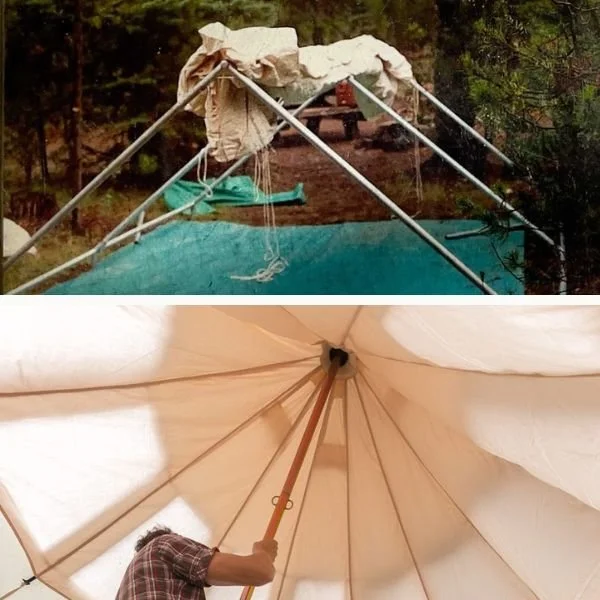
Bell tents have fewer poles and less hardware than wall tents, making them lighter and quicker to assemble, even solo. Their conical shape is supported by a single metal center pole and metal A-frame doors, which are then stabilized by guylines and stakes once the canvas is secured atop. Some bell tent manufacturers also offer extra sidewall poles to keep the side walls taut.
On the other hand, canvas wall tent frames require a bit more effort, possibly even an extra hand. Some wall tents come with heavy poles, while others come with angle kits to help you assemble the roof and walls, but require you to make the poles. However, DIY-ing poles offers its own advantages. If you’re handy, it’s easy to head to a local hardware store to have EMT conduit poles cut to size, or do it yourself. Alternatively, backcountry outfitters can cut the frame from downed timber on site.
While each style of canvas tent is sturdy, their form and structure differ, so it’s a smart idea to understand their overall bulk and weight, consider how you’ll transport and store them, and how much effort each takes to pitch and break camp.
Learn more about how to set up a wall tent and how to set up a bell tent.
Flooring & Sod Cloths
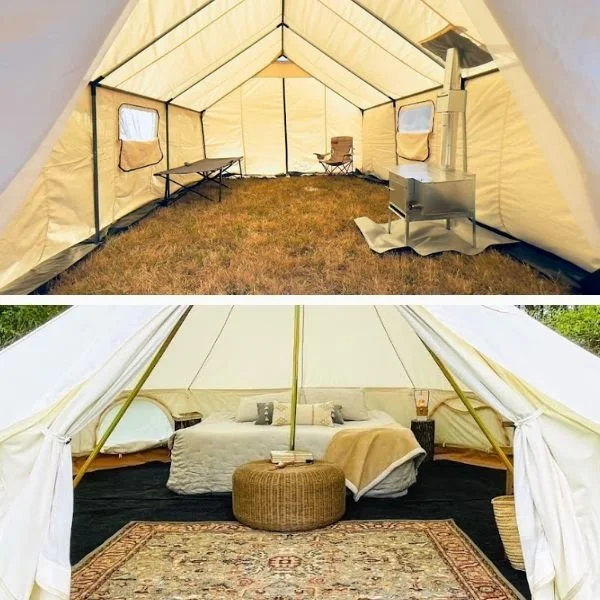
Let’s talk about flooring when it comes to wall tents and bell tents.
Similar to a standard car-camping or backpacking tent, bell tents have a sewn-in groundsheet. Typically, the groundsheet is made of durable, waterproof PVC that can withstand moisture, rocks, and sticks beneath it (although an extra ground tarp is always recommended).
In contrast, wall tents lack a groundsheet. Instead, they have something called sod cloths, which are flaps that tuck inside or outside the tent, depending on several factors. In addition, this wall tent feature opens up your flooring options. For example, outfitters and hunters who tend to come and go may want something easier to clean and replace.
We won’t get into the details here, but it’s important to fully understand how a sod cloth works, as this might be a deciding factor when choosing a wall tent vs. a bell tent.
Breathability, Insulation & Warmth
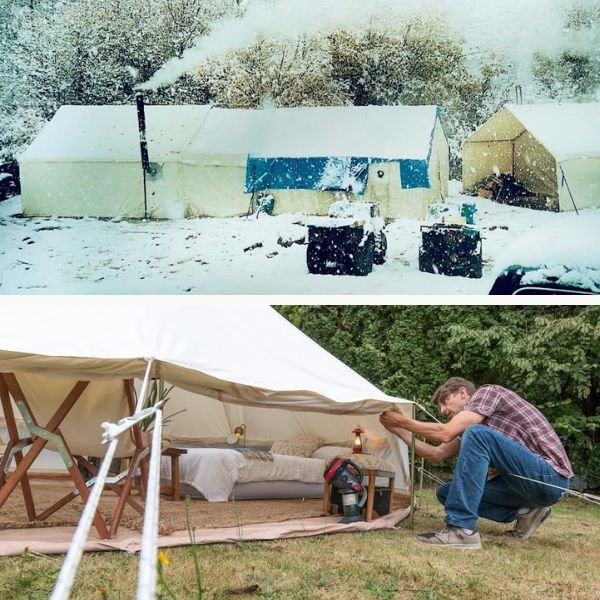
Each tent style offers a thick, rugged canvas for warmth and protection. Beckel’s wall tents are made of heavy-duty 10.1 oz. Sunforger® cotton canvas, capable of being a four-season tent or hot tent that is ideal for winter hunting excursions, so long as you have an appropriate flooring (like tarp, rugs, and carpeting) to take on cold ground.
What about when you need ventilation? Canvas wall tents have doors but are typically not made with windows. Instead, windows are often an add-on feature (for example, Beckel offers two windows in our upgraded Comfort Package). Bell tents offer mesh-screen windows along their sidewalls (that often can be raised and rolled up) and sometimes even a skylight in the conical roof. Overall, with windows on all sides, bell tents let in more natural sunlight and breezes. But setting up wall tents requires more thought about wind direction to get that airflow you need.
Wall tents come standard with a stove jack hole – ready for that wood-burning stove! That’s not always the case with bell tents. In fact, if you want a stove-friendly bell tent, do your research and find one with canvas treated to meet flame-resistance standards (such as CPAI-84). You can always cut a stove jack hole yourself!
Bell Tents vs. Wall Tents: Define Your Camping Intentions
With all the above features in mind, there is one final consideration. How will you be using your canvas tent? Where you plan to set up and how you camp will help you decide.
Both can be used for glamping. Bell tents are a popular and affordable glamping option for two people. But safari-style canvas wall tents can add an extra luxurious touch to glamping rentals, too.
On the flipside, if you’re a backcountry outfitter or large hunter party, wall tents are a great solution for long-term camping. Wall tents also make for a nice communal gathering space, a camp kitchen at basecamps, or a temporary guestroom or living space on your property.
Bell tents can also make excellent hunting base camps, particularly for hunters who want a roomy canvas shelter without hauling a full wall-tent frame. Life inTents offers canvas hunting tents with options such as stove jacks, enclosed waterproof floors, and large interiors designed for hunters and their gear.
We’re admittedly partial to canvas tents in all their forms. Beckel has been building traditional canvas shelters for generations, while companies like Life inTents have helped bring modern bell tents to family camping, hunting camps, and glamping. Ultimately, the best design is the one that fits how you actually plan to camp.
So… what feels right to you? Is it a canvas wall tent or a bell tent?