
Origins of the Duffel
Do you know where duffel bags came from and how they got their look? Truth be told, they have an interesting backstory, far older than their stint in the military.
Read on to learn all about the origins of the duffel bag and the evolution that brought it to become the iconic bag we know today.
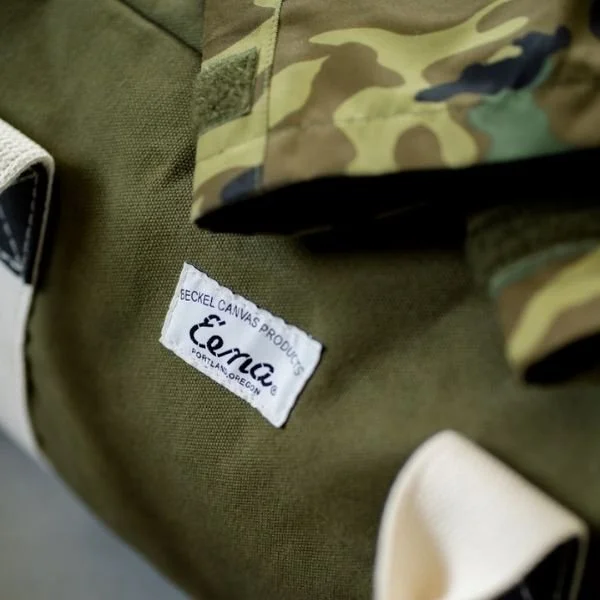
Duffel Bag History: From Belgium to Battlefields
Today, we call them “duffels” (sometimes alternatively spelled “duffles”). But these time-worn iconic bags have seen some things. From their Belgian origins to their use in the military, duffel bags have carried gear and essentials, providing a functional and even stylish piece of luggage for ages.
The Belgium Wool That Started It All
Way back in the 17th Century, the town of Duffel, Belgium, produced a thick wool-like fabric. Yep, this is exactly how the duffel bag got its name. But the story is far more interesting than that.
The heavy, woolly duffel cloth was typically used for other essentials, most notably garments such as duffel coats with toggle-and-rope fastenings (think Paddington Bear).
In time, however, the thick duffel material was made into a simple bag. This bag didn’t yet have a cylindrical shape; it was more of a pouch tied with rope. Often used by Spanish and Portuguese sailors as a “ditty bag” to carry their personal effects, the duffel material was thick enough to withstand a lot of wear and tear.
There was just one big problem: When wet, the duffel wool became heavy.
Seafarers needed a more water-resistant, quick-drying solution.
Sailcloth Inspires the Canvas Duffel
Sailors got savvy. Instead of using a dense wool duffel cloth, they started sewing scrap sailcloth as reinforcement along their ditty bags.
These newly invented sailcloth sacks offered multiple advantages. For starters, they absorbed minimal moisture, making them lighter cargo. The sacks were also now capable of taking on salt air. Not to mention the sailcloth was a stronger material overall, already proven each time it was hoisted. It could take on wind, rain, and whatever the ocean threw at it.
Eventually, the idea caught on and the sailcloth canvas became the preferred material for their sacks.
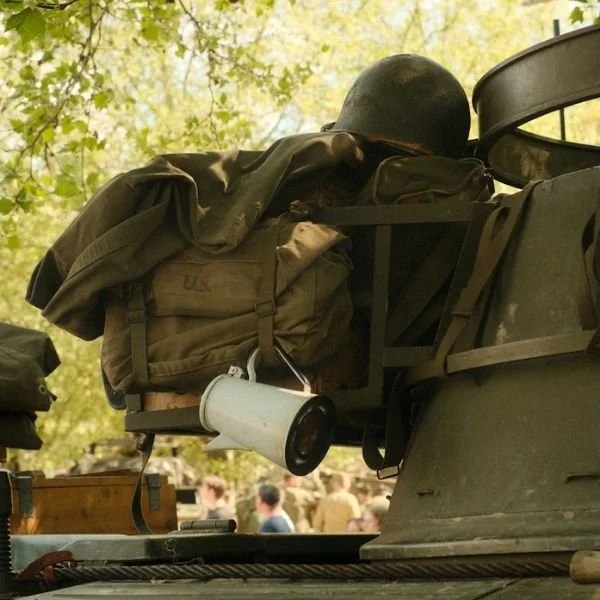
Canvas Duffels Become Military-Grade
Transformed into a durable bag able to withstand the elements, the duffel bag caught the eyes of the U.S. and British militaries.
By World War I, duffel bags had become standard issue for soldiers to carry uniforms and gear (along with their bedrolls). The simple sack evolved into the cylindrical canvas bag design we know today, with metal grommets and a drawstring closure at one end for quick loading and securing.
The duffel, proven to be a useful military-grade bag, was used again in World War II. By this time, it was upgraded with carrying straps so that soldiers, airmen, and sailors could transport the packs more easily. They were also upgraded with woven webbing and reinforced bottoms to support the weight. And, of course, they were sewn from the heavy duck canvas we now know, in camouflage olive drab/army green.
All features that made duffel bags supremely effective and functional for survival.
From Military Service to Civilian Life
You can still find green duffel bags at Army surplus stores. But after their military service, which included Vietnam, duffel bags found their way into civilian life. They became a popular, even fashionable, means of transportation for everyday folks and everyday travel.
Duffels became useful gym and sports bags, redesigned with newly invented synthetic fabrics such as vinyl, polyester, and ballistic nylon. Zippers were eventually added too!
Durable Canvas Duffels Can Still Be Found
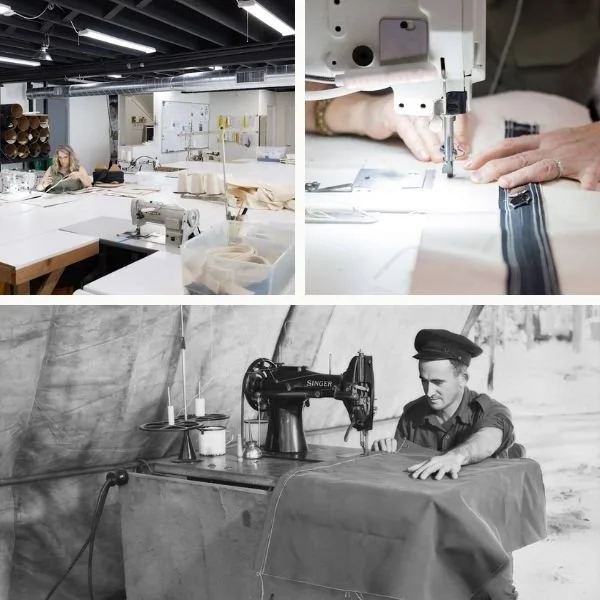
Sadly, making affordable, trendy synthetic duffel bags for the masses ultimately sacrificed their durability and sustainability. Something you still see in today's fast-fashion vs. slow-fashion movements.
Call us biased, but we believe canvas is still superior in many ways. It resists abrasion and stands up to dirt, moisture, and repeated use. It simply builds characters with everyday wear and tear, and the components like zippers, webbing, and stitching can always be mended and reinforced.
The good news is that heavy-duty canvas duffel bags are still available. Reputable brands like Beckel Canvas are still making them. You just need to know where to look.
Take a look at our three best duffel bags to see what we mean. From the classic military-style duffel to the modern day-trip bag, we offer rugged duffels as tough as their ancestors and veterans.